

Sustainability
In recent years, the demand for green energy and sustainable business practices has grown significantly. At Belgian Cycling Factory, sustainability is not a trend or a slogan, but a continuous commitment embedded in the way we design, produce and operate our business. Just like in the development of a high-performance bicycle, sustainability is built through marginal gains — a series of thoughtful, often small improvements that together make a meaningful difference.
Cycling itself is already one of the most sustainable forms of mobility. Nevertheless, we believe our responsibility goes further than the product alone. Across our facilities, processes and long-term strategy, we actively invest in solutions that reduce our environmental footprint, improve working conditions and contribute to a more responsible cycling industry.
Renewable energy and sustainable mobility
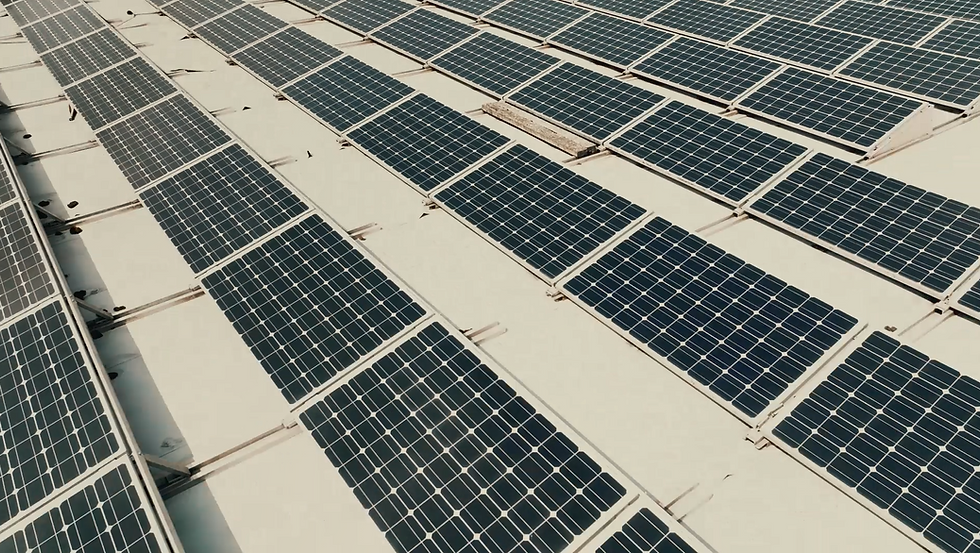
At our headquarters and production facilities in Beringen, sustainability is clearly visible. A total of 1,584 solar panels installed on our roofs generate approximately 376 kW of renewable electricity. On an annual basis, this production equals the electricity consumption of around 110 to 130 average households and allows us to avoid an estimated 180 to 200 tonnes of CO₂ emissions per year compared to conventional grid electricity.
In addition, we actively support sustainable mobility within our organisation. Our company fleet is gradually being electrified, supported by on-site charging infrastructure. Employees are encouraged to commute by bike through a cycling allowance, with several colleagues covering long daily distances by bicycle — often on a Ridley — proving that cycling is both a practical and sustainable transport solution.
Changes to packaging and logistics
Packaging plays an important role in reducing environmental impact. Belgian Cycling Factory collaborates with VPK Group, a leading packaging specialist, to continuously improve packaging efficiency.
Previously, insulation foam was used to protect bicycles during transport. This material was environmentally harmful in both production and waste processing. Today, bicycles are packed in a sturdy outer box containing smaller internal boxes for components, ensuring protection while significantly reducing environmental impact.
Handlebars are now rotated and partially folded under the frame without damaging integrated cabling. This allows for much more compact packaging and efficient use of space. Where a full truckload of cardboard used to leave the factory, the same volume can now be reduced to a single pallet — resulting in fewer transport movements, lower emissions and reduced storage requirements.
In addition, packaging is now completely free of metal staples, eliminating metal contamination in the recycling process. Individually, these may seem like small adjustments, but together they create a substantial reduction in waste and transport impact.
Cleaner production through water-based paint technology
Another key improvement is the conversion of our in-house paint shop to water-based paint systems. These coatings contain approximately 90% fewer volatile organic compounds (VOCs) compared to traditional solvent-based paints.
This transition significantly improves indoor air quality for our employees while reducing environmental impact. Water-based paints allow for thinner yet higher-quality coating layers, reducing overall material consumption. They also eliminate the need for chemical thinners, as dilution is done with water — resulting in a cleaner, safer and more efficient production process without compromising finish quality.
Reuse of protective materials in assembly
Sustainability is also reflected in everyday operational decisions on the shop floor. Protective packaging materials used during frame production are no longer discarded after a single use. Instead, they are actively reused in the assembly department as bike protection sleeves and handlebar covers.
This initiative allows Belgian Cycling Factory to reuse approximately 3 tonnes of protective plastic material per year, significantly reducing waste while maintaining safe and secure transport of finished bicycles. It is a clear example of how employee-driven innovation can turn simple ideas into practical, scalable sustainability improvements.
Responsible manufacturing and product longevity
Sustainability does not stop at operational efficiency. Product longevity plays an equally important role. Belgian Cycling Factory offers a lifetime warranty on frames, encouraging repair and long-term use rather than premature replacement.
We acknowledge that carbon fibre production involves complex global supply chains and transport. Extending product lifespan is therefore one of the most effective ways to reduce the overall environmental footprint of a bicycle. Durable, repairable products retain value, reduce waste and support a more circular approach to manufacturing.
Where possible, production is carried out in-house and only initiated upon order placement. This ensures optimal efficiency, avoids overproduction and limits unnecessary stock and transport.
A continuous commitment
At Belgian Cycling Factory, sustainability is a continuous journey built on hundreds of decisions — large and small — taken every day. From renewable energy and cleaner production technologies to smarter packaging, employee engagement and long-lasting products, each step contributes to a more responsible future.
We remain committed to continuously improving our environmental performance while delivering high-quality, innovative bicycles for cyclists around the world.